2026 | 22:00 | 4k
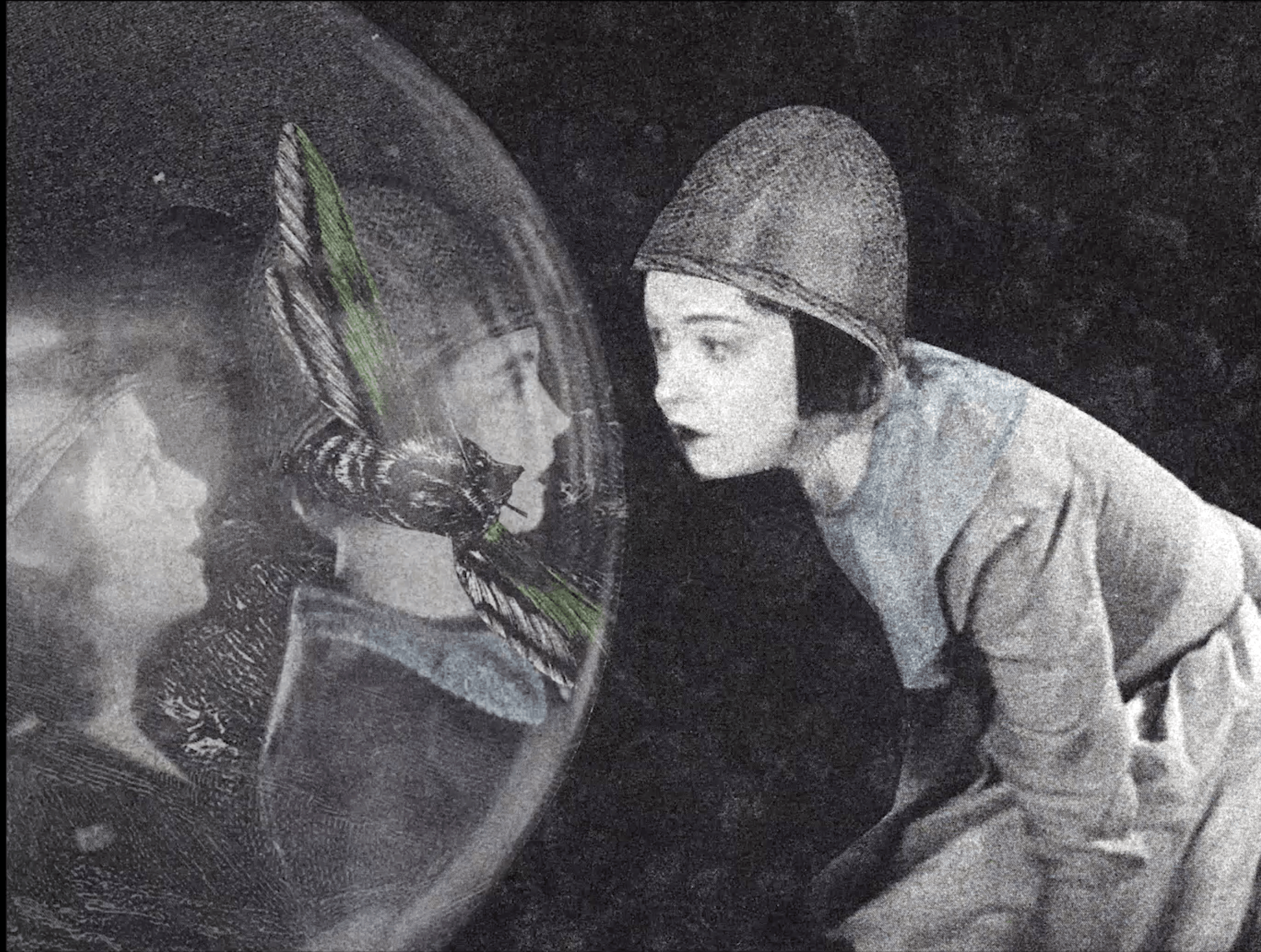
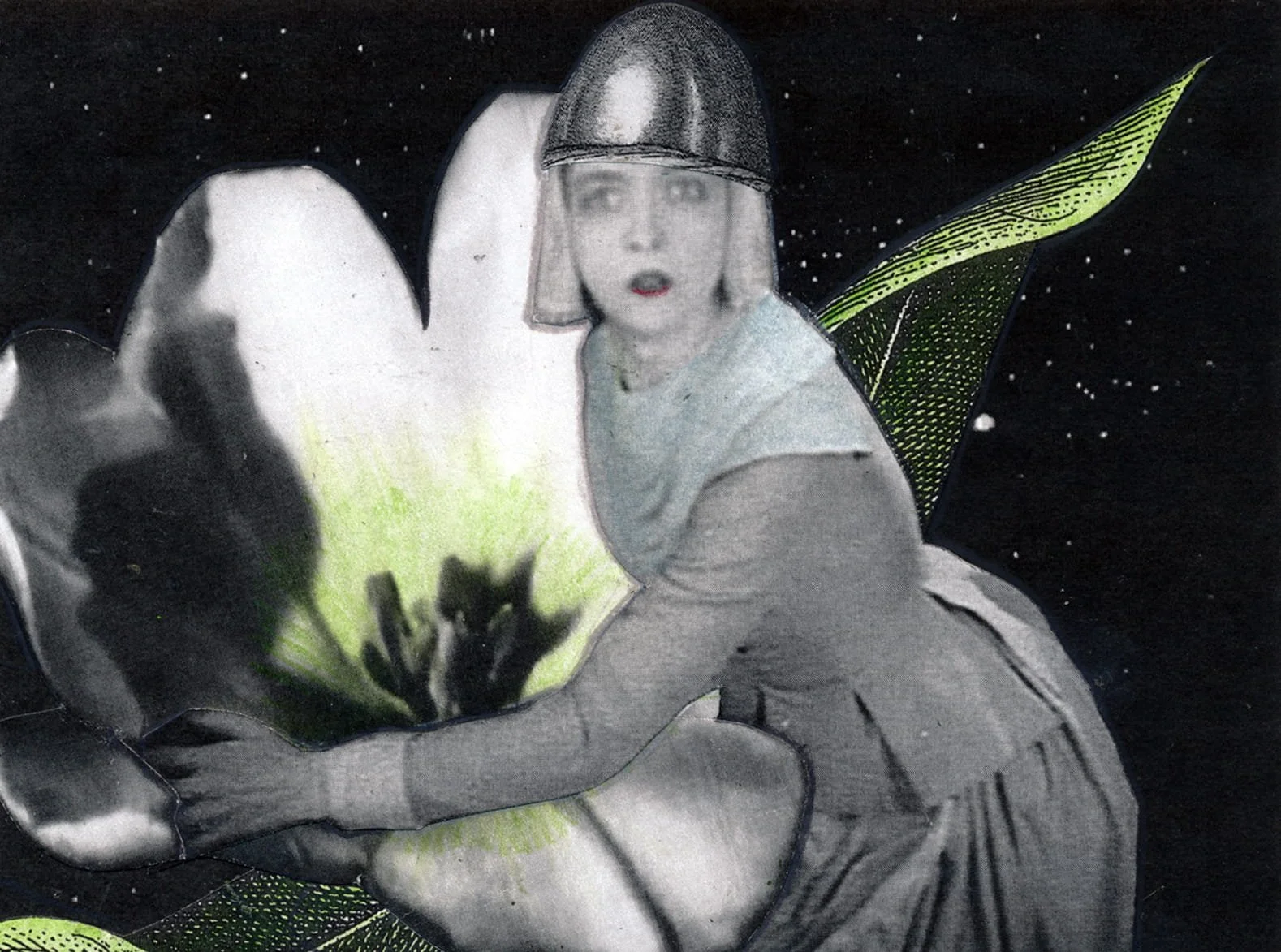
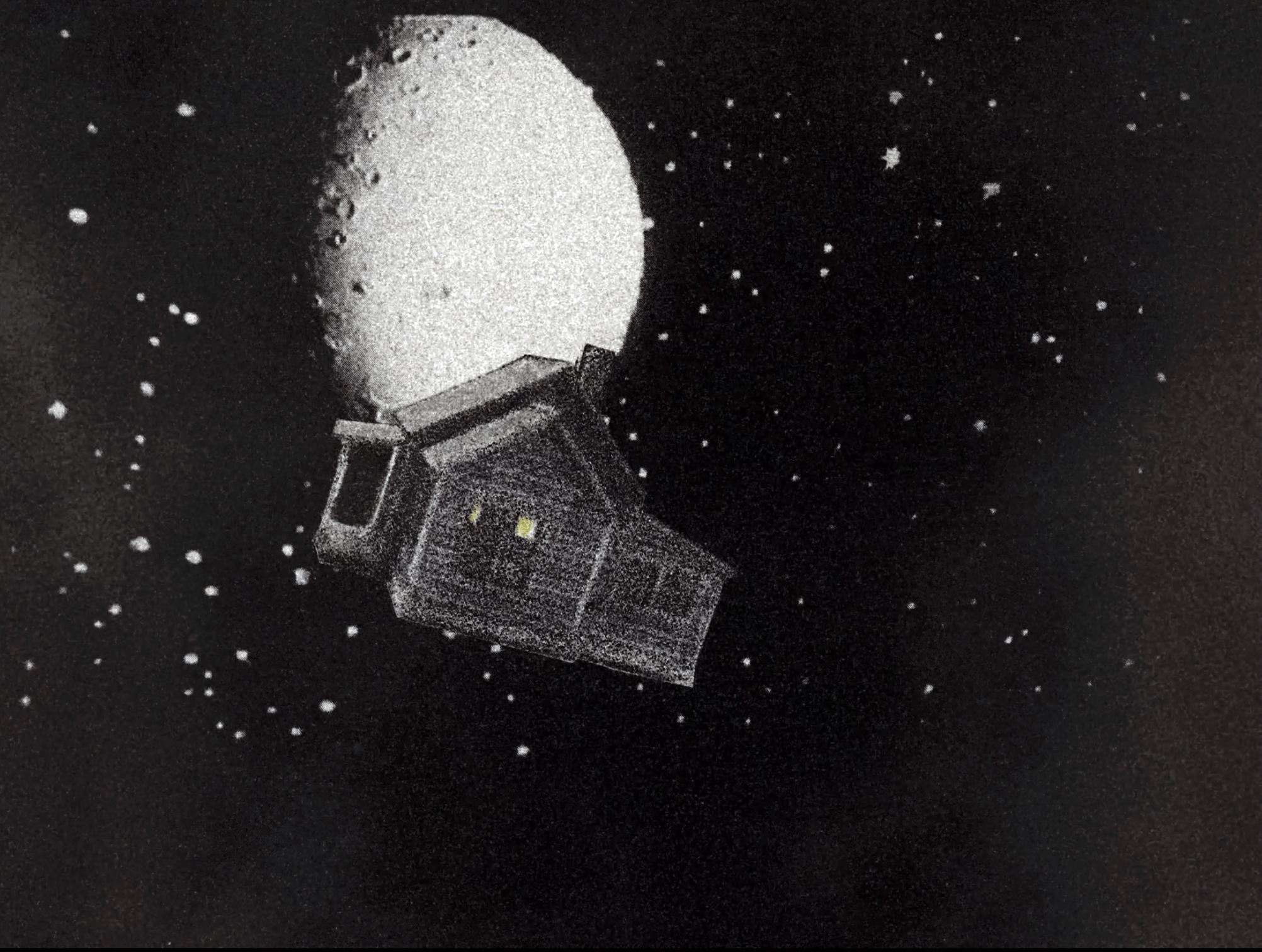
A tiny farmhouse spins through the cosmos. On board is silent film actor Lillian Gish, alone in the vastness. A dreamlike construction conjures a surreal meditation evoking wonder and longing, connection and loss. Wildfires, an existential threat in Colorado where the filmmakers live, emerge as a key element. Meticulously crafted from thousands of handmade collages, the film features Gish and Janet Gaynor, alongside Spanish actor Ana Torrent. For each of them, image sequences are extracted from their early films and recast to create a contemplative, uncanny epic.
This film is a collaboration between Stacey Steers and John Romano. Stacey conceptualized the film, sourced the collage elements, and designed and crafted all the handmade collages, which she then shot in sequence. John edited the footage granularly, expanding the film’s vocabulary through the construction and editing process.
Stacey discovered the poem “Rain Light” by W. S. Merwin five years into the project and was startled by how beautifully Merwin had rendered in language the sense of the world she had been working to build visually. With permission from the Merwin estate, the poem is woven into the film’s structure. The title comes from the poem’s opening line. Music and sound design are by London-based artist Udit Duseja.
The Stars Watch from Long Ago
Production notes
2026 | 22:00 | 4k
An experimental, handmade animation constructed from thousands of intricate paper collages, The Stars Watch from Long Ago was seven years in the making. The collages combine archival images from early silent films with fragments of eighteenth- and nineteenth-century engravings and illustrations, drawing from sources that explore personal relationships, science fiction, the natural world, and cinematic language. Built intuitively, the film’s narrative core evolves into a fluid presence thick with suggestion and left open to interpretation. The film features silent-era actors Lillian Gish and Janet Gaynor. The child is portrayed by Spanish actor Ana Torrent, whose images are drawn from her iconic performances in The Spirit of the Beehive (1973) and Cría Cuervos (1976). Udit Diseja designed the sound after the visuals were completed.
“I always begin a film by discovering a landscape that serves as an anchor. I had the idea of using outer space as an overarching element, but I struggled with how to ground this choice. I was drawn to the idea of space as an embodiment of wonder, something that gives us a profound sense of astonishment and awe. For the philosopher Hannah Arendt, this feeling of wonder is the basis of all meaning and a mooring for our lives. Still, I did not know how to find my footing in the cosmos; the notion felt too vast and groundless.
While searching for image sequences, I began thinking about The Wizard of Oz. It occurred to me that the little house spinning through the sky could become a spaceship for my central character, Lillian Gish. The iconic familiarity of the house provided an entry point into the vastness of outer space and opened a way forward. I decided to compound the idea of wonder by introducing phantom presences. Perhaps they are manifestations of longing or embodiments of memory—certainly they evoke mystery and a desire for wholeness. Only later did my unease around wildfire—a constant threat here in Colorado—begin to inform the film, emerging gradually as I worked.
I collaborated on this film with John Romano, whose relationship with me has evolved over the years since he was my student. John became expert at layering collages in Adobe Premiere to create these phantom presences. During this project, I began using green-screen collages, which made the layering of textures and images more versatile. Crucially, every element of the film still exists as a piece of paper. When I found a texture I wanted to include, I created an image sequence on paper and rephotographed the frames, often adding a touch of color. John edited the entire film, making use of collage sequences and shots in ways that frequently surprised me and expanded the project’s scope.
In this film, I explore alternatives to traditional narrative structure, combining experimental montage with narrative interludes. The most challenging part of the process is discovering the right materials for the collage sequences—materials that feel aligned with the image choices and the emerging outline of the film. I am drawn to both the surreal and the gothic. As I build images, I introduce incongruous or unexpected objects into preexisting film frames or newly assembled collage environments to generate new meaning. Unseen, lurking forces sustain a feeling of uncertainty and ambiguity. I hope the results feel dreamlike, psychological, and heavy with suggestion, with the uncanny hovering throughout. Years of living in Latin America left me attuned to atmospheres laden with mystery and to a sense of an invisible world tangibly present in daily life.
The Stars Watch from Long Ago has a serpentine structure, circling in on itself like a swirl within a cocoon. I wanted a sense of tenderness and enveloping darkness that enfolds like a warm blanket rather than obscuring. Darkness here is a long, familiar hallway with a door at the end. Elements of the uncanny create curiosity and hesitation in my heroines, but not dismay. I am drawn to moments of ambiguity and intimacy, and to actors who bring psychological complexity to their performances. Loss can be overwhelming, but my heroines face moments of transition with astute reflection and self-awareness. My films linger over fleeting expressions because I am fascinated by interiority and by the psychological role of longing as a repository of dreams and yearnings. This interior orientation can provoke or mediate experience, shaping how meaning is formed.
The film’s title comes from the poem “Rain Light,” by W. S. Merwin, which I discovered five years into the project. I was startled to see how beautifully Merwin had rendered in language a sense of the world I had also been working to build. With permission from his estate, the poem is woven into the film’s structure. The title is drawn from the poem’s opening line, “All day the stars watch from long ago” (1).”